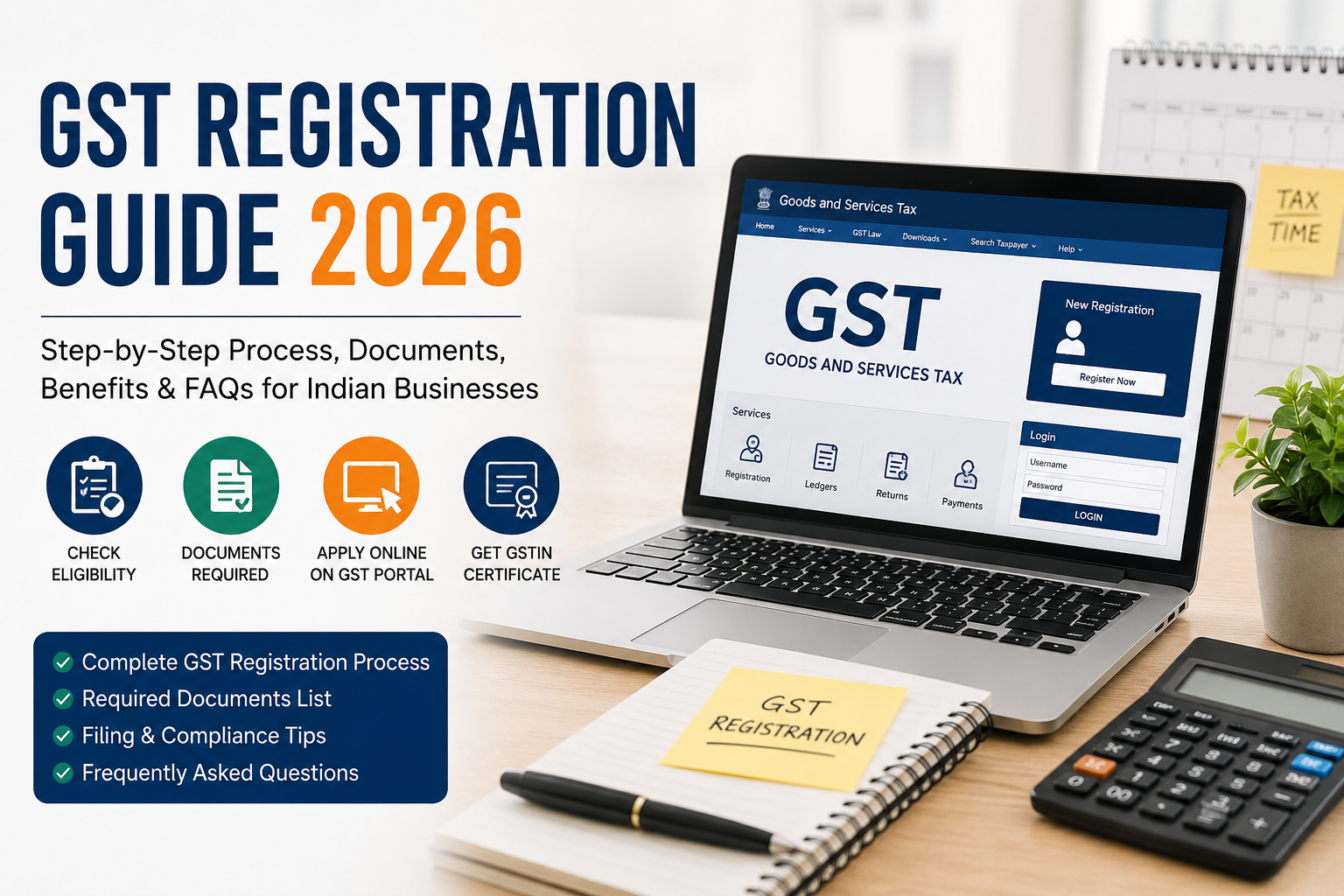
Why GST Registration Is a Game-Changer for Indian Businesses
Navigating the Indian tax landscape can feel overwhelming—but understanding Goods and Services Tax (GST) registration is a crucial first step toward compliance and growth. Over 1.5 crore businesses across India have enrolled in the GST system, from small traders in New Delhi to e-commerce sellers in Bengaluru. Whether you're running a startup, a service provider, or a retail venture, registering under GST isn’t just a legal requirement—it’s a strategic move that enhances credibility, unlocks input tax credit, and enables seamless interstate trade.
Without GST registration, businesses risk penalties, restricted B2B transactions, and exclusion from government tenders. Moreover, registering opens access to digital invoicing, simplified compliance, and eligibility for government incentives—key advantages for MSMEs aiming to scale. If your annual turnover exceeds ₹20 lakh (or ₹10 lakh in North Eastern and hill states), registration is mandatory.
In this guide, you’ll learn the complete process of GST registration—from document preparation and portal navigation to post-enrollment compliance tips. We’ll walk you through each step with clarity, helping you avoid common errors and ensure a smooth submission. Ready to get your business GST-compliant? Let’s begin.
Step 1: Check if Your Business Needs GST Registration
Before diving into the GST registration process, the first critical step is determining whether your business is legally required to register. This decision hinges on two key factors: your annual turnover and the nature of your business operations across India.
Start by evaluating your aggregate turnover, which includes all taxable supplies, exempt supplies, and exports under the same PAN. If your annual turnover exceeds ₹40 lakh for goods or ₹20 lakh for services—₹10 lakh in special category states like Himachal Pradesh or Northeast regions—GST registration is mandatory. For businesses operating in multiple cities such as Bengaluru, Mumbai, or Kolkata, ensure you assess turnover cumulatively across all locations.
Next, consider your business type. Certain entities must register for GST regardless of turnover. This includes e-commerce sellers, inter-state suppliers, agents of taxable persons, and those liable for reverse charge. Additionally, if you're operating under a composition scheme or providing exclusive services like consulting or digital marketing, special thresholds and rules apply.
Tip: Keep detailed sales records and categorize income streams by type—goods vs. services—and geography to accurately forecast liability. Early assessment prevents penalties and ensures seamless invoicing and input tax credit claims once registered.
Step 2: Gather All Necessary Documents Before Applying for GST
Before you begin your GST registration, compiling the required documents is a critical step that can make or break your application’s approval timeline. Missing or incorrectly formatted paperwork often leads to delays, especially for small and medium businesses across cities like New Delhi, Mumbai, and Bengaluru where compliance scrutiny is higher. To ensure a smooth process, follow these essential steps:
- PAN Card of the Business or Proprietor
Your Permanent Account Number (PAN) is the foundation of your GST application. Ensure it’s valid and matches the legal name of the business or owner. - Proof of Business Address
Submit any one of the following: electricity bill, rent agreement, property tax receipt, or municipal khata. If the property is rented, include a No Objection Certificate (NOC) from the landlord. - Bank Account Details
Provide a canceled cheque or bank statement showing the account number, IFSC code, and bank name. The account should be operational and in the business’s name. - Identity and Address Proof of Promoters
For partners, directors, or proprietors, include Aadhaar cards and passport-sized photos. These help verify the stakeholders’ details during authentication. - Digital Signature (if applicable)
While not mandatory for all applicants, businesses like companies or LLPs often require a valid Class 2 DSC for verification.
Pro Tip: Scan and organize all documents in PDF format, labeled clearly by category. Double-check that names, addresses, and PAN details are consistent across all files to avoid rejection.
Step 3: Set Up Your GST Portal Account & Complete REG-01 Accurately
Creating an account on the GST portal and successfully submitting Form GST REG-01 is a critical milestone in becoming GST-compliant. This step transforms your business from GST-ready to officially registered, enabling you to collect tax, claim input credits, and operate legally across India—including in high-compliance zones like New Delhi, Mumbai, and Bengaluru.
Follow these steps carefully:
- Visit the Official GST Portal
Navigate to the government’s GST e-filing website. Look for the “Services” tab and select “Registration > New Registration” to begin. - Create a Login Credential
Click “Register Now” and select your business type. Enter your PAN, a valid mobile number, and email ID. An OTP will be sent to both—verify them promptly to proceed. - Fill Part A of Form GST REG-01
Enter basic details like business name, trade name (if any), and state. Upon submission, you’ll receive a Temporary Reference Number (TRN). Keep this safe—log back in anytime using it. - Complete Part B with Full Documentation
Using your TRN, fill in business address, promoter details, bank account information, and upload required documents: PAN card, Aadhaar, proof of business address (rent agreement or electricity bill), and incorporation certificate (if applicable). - Verify and Submit with DSC or EVC
Digitally sign the application using your Digital Signature Certificate (DSC) or Aadhaar-based EVC. Accuracy here prevents delays—double-check entries, especially GSTIN-linked bank details.
Pro Tip: Ensure mobile and email belong to the authorized signatory; the GST portal uses them for real-time updates and verification. Missing deadlines at this stage can disrupt invoicing and B2B operations—start early and track your application status using the TRN.
Step 4: Complete the Verification Process – OTP, ARN Tracking & Resolving Common Hurdles
After submitting your GST registration application, the final and critical phase begins: verification. This step ensures the authenticity of your details and moves your application toward approval.
- Verify Your Identity with OTP
Once you submit the form, an OTP (One-Time Password) is sent to the mobile number and email ID linked to your PAN. Enter these OTPs promptly to validate your identity. Delays in OTP submission can pause the process, so ensure your contact details are active and accessible. - Track Your Application Using ARN
After successful OTP verification, you’ll receive an Acknowledgement Reference Number (ARN). Use this number to monitor your application status on the GST portal. Updates typically reflect within 3–7 working days, especially for businesses in New Delhi, Mumbai, or Bengaluru where processing is streamlined. - Address Common Verification Issues
- Mismatched PAN or Aadhaar details can trigger verification failure—double-check all entries.
- Bank account validation delays often occur due to incorrect IFSC or account number entry. Confirm these match your ECS mandate.
- If your application is pending for over 15 days, log a support request under “Track Application” to escalate.
Pro Tip: Keep scanned copies of proof documents (like address proof, ID, and bank statement) ready in case a GST officer requests them during verification. Timely responses prevent application cancellation.
GST Registration FAQs: Timelines, Costs & Amendments Explained
How long does GST registration typically take?
The standard processing time for GST registration is 3 to 7 working days after submission. In most cases, once you've uploaded all required documents and submitted Form GST REG-01, the GST portal assigns an application reference number (ARN). You can track its status online using this ARN. Some applications are processed instantly under the automated approval system, especially if all details match PAN and Aadhaar records. However, delays may occur if additional verification is triggered, so ensure all business and promoter details are accurate and consistent.
Is there a cost to register for GST?
No, the Indian government does not charge any fees for GST registration. It is completely free to register on the official GST portal. Avoid third-party services that promise "fast-track" registration for a fee—these are unnecessary and may expose you to data risks. You only need to invest time in gathering documents like PAN, Aadhaar, address proof, and bank details.
What documents are needed for GST registration?
Key documents include PAN of the business, proof of business constitution (like a partnership deed or incorporation certificate), identity and address proof of promoters, and bank account details. For the business address, utility bills, rent agreements, or property documents are accepted—especially important for businesses in New Delhi, Mumbai, or Bengaluru.
Can I apply for GST registration online from any location?
Yes, the entire process is digital and accessible from anywhere in India. Whether you're registering a home-based startup in Hyderabad or a retail store in Pune, you can complete registration via the GST portal without visiting an office.
What if I need to correct details after registration?
You can amend most GST registration details—such as mobile number, email, or business address—through the GST portal under the Amendment of Registration service. However, significant changes like a shift in business constitution or addition of partners may require approval and additional documentation.
When should I apply for GST registration based on turnover?
Businesses must register for GST if their aggregate annual turnover exceeds ₹40 lakh (₹20 lakh for special category states). For service providers, the threshold is ₹20 lakh (₹10 lakh in special category states). If you anticipate crossing the limit, apply before the threshold is breached to avoid penalties.
Can I cancel my GST registration if I stop business operations?
Yes, you can apply for cancellation of registration through Form GST REG-16. Ensure all pending returns are filed and liabilities paid before initiating the process. Cancellation helps avoid compliance burden and potential notices.
Final Steps to GST Registration Success and Staying Compliant
You’ve now walked through the essential stages of registering for GST—from gathering your PAN, proof of business registration, and address documents, to completing the online application via the GST portal. For entrepreneurs in New Delhi, Mumbai, Bengaluru, and across India, this process is a critical milestone in formalizing your business and unlocking legal, financial, and operational advantages. With your ARN generated and verification completed, whether through Aadhaar-based e-Verification or EVC, you’re on the verge of receiving your GSTIN and onboarding into the formal economy.
Now is the time to take actionable next steps: download and save your GST certificate, activate your GST portal account for return filing, and integrate your GSTIN into your invoicing system. Begin maintaining accurate records of outward and inward supplies, and set calendar reminders for monthly or quarterly GSTR-3B and GSTR-1 submissions. Timely compliance not only avoids late fees but enhances your credibility with vendors and financial institutions.
Remember, GST registration isn’t a one-time task—it’s the foundation of ongoing tax responsibility. Stay ahead by reconciling your ledgers with auto-drafted returns, leveraging input tax credit efficiently, and revising details promptly if your business structure or address changes. Whether you're a small trader in Hyderabad or a service provider in Pune, staying compliant starts with a well-executed registration and continues with disciplined follow-through. Take control today—your organized future begins now.