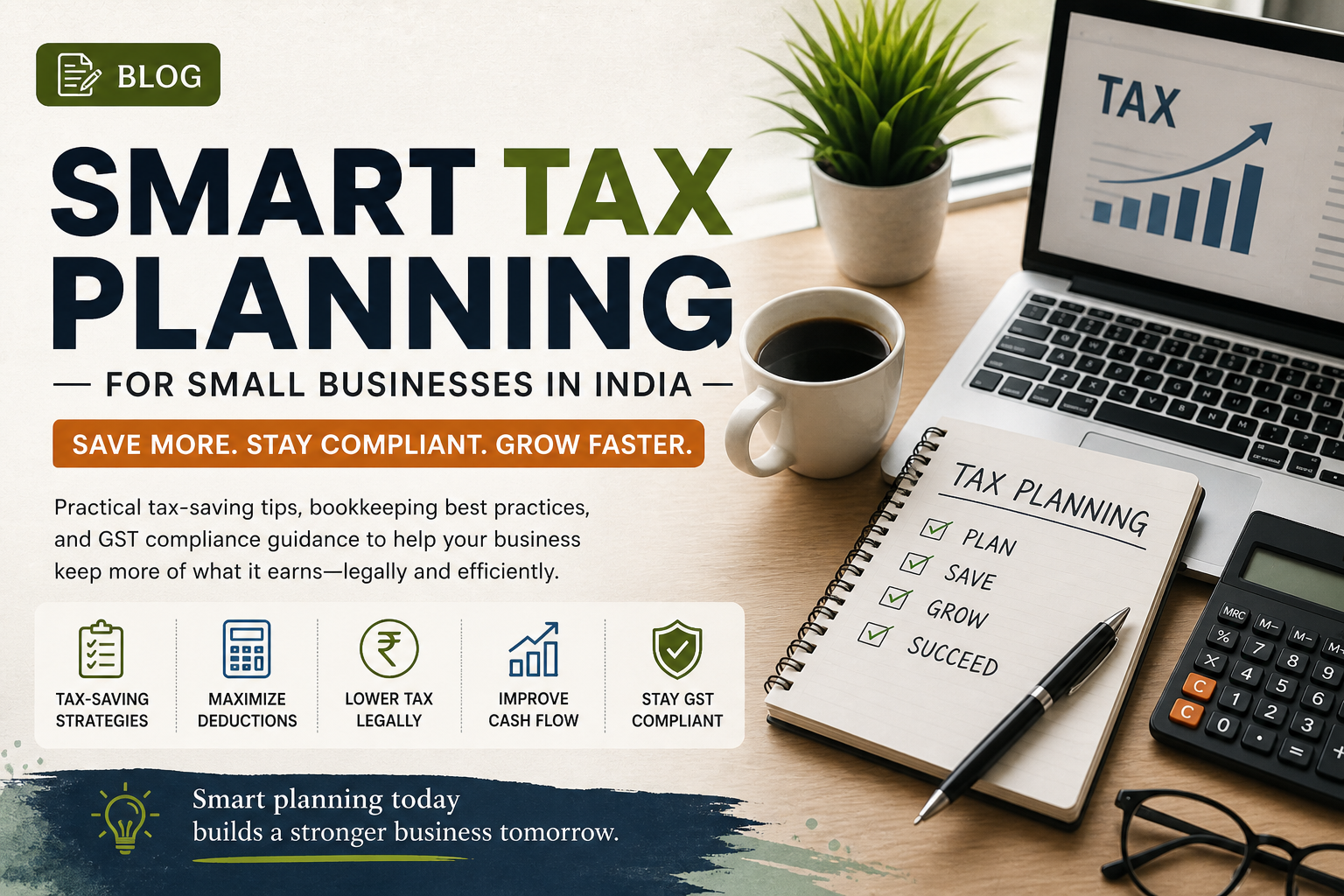
Smart Tax Planning for Small Businesses in India
Running a small business in India brings exciting opportunities—but managing taxes can feel overwhelming. From GST compliance to income tax filings, constantly changing regulations often create confusion, especially in growing markets like Delhi NCR, Mumbai, and other tier-2 cities.
The reality is simple: many small businesses end up paying more tax than necessary—not because of high income, but due to lack of awareness and planning.
The good news? With the right tax strategies, you can legally reduce your tax burden and improve profitability.
5 Smart Tax-Saving Tips for Small Businesses
1. Leverage Section 80IE Benefits
If your business is involved in infrastructure sectors like power, water, or transport, you may qualify for significant deductions under Section 80IE. This can reduce your taxable income drastically if applied correctly.
2. Choose the Right Business Structure
Your business structure directly impacts your tax liability.
- Sole Proprietor → Simple but limited deductions
- Partnership → Moderate flexibility
- Private Limited Company → Maximum tax benefits & deductions
Choosing the right structure can optimize taxes and support long-term growth.
3. Maximize Deductions (80G & 35AD)
- Donations under Section 80G → Reduce taxable income
- Investments in specified sectors under Section 35AD → 100% deduction
These are powerful but often underutilized tax-saving tools.
4. Use Presumptive Taxation (Section 44AD)
If your turnover is under ₹3 crore:
- Declare 6% (digital) or 8% (cash) income
- No need for detailed books
- Lower compliance burden
Perfect for small traders, freelancers, and service providers.
5. Smart Salary Structuring
Even small businesses can save tax by structuring salaries:
- HRA (House Rent Allowance)
- LTA (Leave Travel Allowance)
- Medical reimbursements
This reduces overall taxable profits while improving employee satisfaction.
Why Bookkeeping is Your Biggest Tax Saver
Good bookkeeping isn’t just accounting—it’s your strongest tax-saving tool.
- When your records are clean:
- You claim every eligible deduction
- Avoid penalties
- File returns quickly
Stay audit-ready
Best Practices:
- Record transactions daily
- Maintain digital invoices
- Reconcile GST regularly
- Track expenses under correct categories
👉 Poor records = missed deductions = higher tax.
Master GST Compliance Easily
GST can be complex—but manageable with the right approach.
Common Challenges:
- ITC mismatches
- Wrong HSN codes
- Filing delays
With Proper Support:
- Accurate return filing
- Maximum input tax credit
- Faster refunds
- No penalty stress
GST compliance, when handled well, becomes a business advantage—not a burden.
Final Thoughts: Take Control of Your Taxes
Tax planning is not just about saving money—it’s about building a stronger business.
When you:
- Track expenses properly
- Use deductions smartly
- Stay GST compliant
- Plan taxes in advance